Conservation challenges in the face of gold mining expansion in Côte d’Ivoire Blog Post
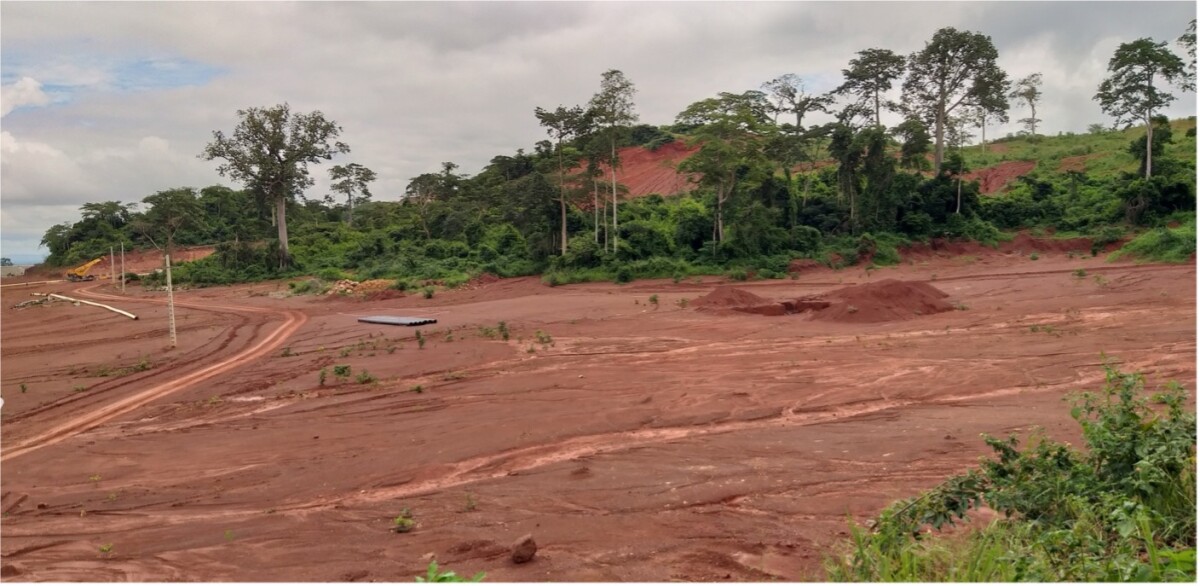
From January 2024 to November 2025, with the generous support of the Cambridge-Africa ALBORADA Research Fund, I carried out a major research project focused on the preservation of tropical forests in the face of the rapid expansion of the mining sector. Entitled “Conservation challenges in the face of gold mining expansion in Côte d’Ivoire”, this project made it possible to highlight the scale—previously largely underestimated—of the direct and indirect impacts of mining activities on Ivorian forests. The picture above illustrates a forest area degraded by mining activities in western Côte d'Ivoire.
This project was both a scientifically enriching and a deeply meaningful human experience. It gave me the opportunity to undertake a three-month research stay at the University of Cambridge, during which I collaborated with a team of experienced, committed, and highly supportive researchers in the Conservation Research Institute. My hosts spanned two departments and lab groups. Professor Garrett’s Conservation and Development Lab in the Department of Geography and Professor Edward’s Tropical Ecology and Conservation Group in the Department of Plant Sciences. This period of scientific immersion and professional development represented an exceptional opportunity for me. Beyond the academic dimension, the stay also allowed me to discover the United Kingdom, a country I had dreamed of visiting since childhood—an experience I greatly appreciated, even if the British winter proved rather challenging for someone coming from a country where average temperatures are around 25 °C.
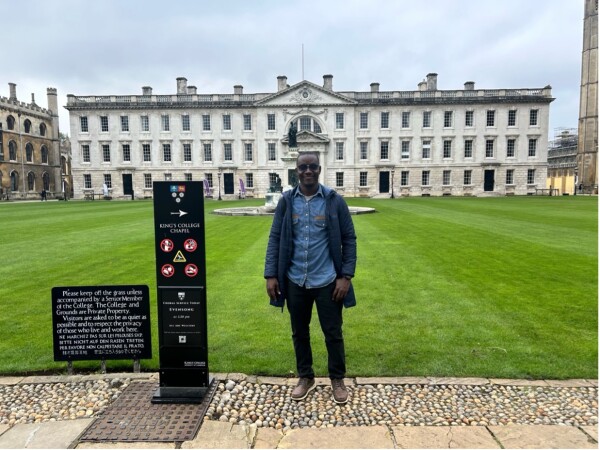
Prince visiting King’s College in Cambridge
Upon my return from Cambridge, the project results were published in Environmental Research Letters, a high impact international scientific journal, enabling us to share our analyses and recommendations with the global scientific community. This publication aims to foster greater awareness and to stimulate further research to deepen understanding of the impacts of the mining sector and to contribute to their mitigation in tropical forests.
Thanks to the understanding and support of the Cambridge-Africa ALBORADA Research Fund coordination team, we also benefited from a project extension that allowed us to organize a national reflection workshop dedicated to the impacts of mining activities on deforestation in Côte d’Ivoire. The workshop brought together 27 participants from around fifteen institutions working in the mining, environmental, academic, and civil society sectors, including the Ministry of Mines, Petroleum and Energy and the Ministry of Environment of my country. It also received wide media coverage (television and print press), helping to amplify the reach of the discussions.
Following the workshop, a synthesis report presenting the main challenges identified and the recommendations formulated was produced and disseminated to all participating institutions, as well as to other key stakeholders concerned by these issues.
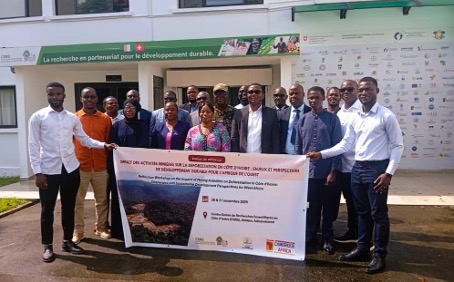
Group photo of participants at the workshop organised at the end of the project
This project opens promising perspectives toward a paradigm shift in the environmental governance of the mining sector. I plan to continue awareness-raising and dialogue with the relevant institutions in order to contribute to meaningful and lasting change. This project has reinforced my belief that scientific research, when supported and valued, can play a key role in the transition to more sustainable development models.
Through these lines, I would like to express my deep gratitude to the University of Cambridge and the Cambridge-Africa ALBORADA Research Fund for this exceptional scientific and human experience, which represents a defining milestone in my journey as a researcher committed to the conservation of tropical forests.
By Dr Prince Vale