Symposium on African Literatures in Blida-2, Algeria
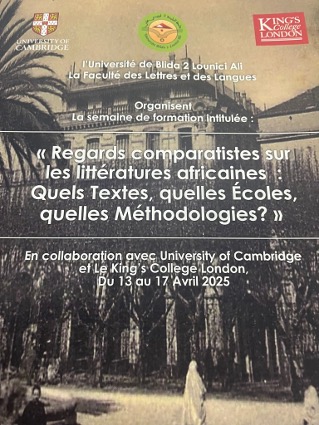
With the generous support of the Cambridge-Africa ALBORADA Research Fund, Cambridge was able to co-organise and participate in a symposium on research and teaching in African literatures at the University of Blida-2, a relatively new and upcoming university in the region. This is the first ALBORADA-funded project with Algeria. The country has been taking steps to increase its English language provision in recent years with a view to strengthening ties with Anglophone nations. It is on this basis that Dr Safa Ouled Haddar, the Vice Rector for External Relations at Blida-2, reached out to colleagues in the US and the UK to discuss the possibility of academic partnerships and collaborations. Discussions began between Dr Maya Boutaghou of the University of Virginia (Department of French) and Professor Hugo Azérad of the University of Cambridge (MMLL) in the first instance and expanded to include a larger group of academics from Cambridge as well as a delegation from KCL, led by Professor Nicholas Harrison (Department of Languages, Literatures and Cultures). Over a period of eighteen months, we worked collectively to build an appropriate programme that combined the specialist and pedagogical interests of our Blida hosts, and of all those attending from the UK. We then travelled to Algeria in April 2025 for the programme, comprised of keynote talks and research panels, as well as roundtable discussions on subjects ranging from translation and adaptation to decolonising approaches to literary studies.
By centring the discussion on African literatures, we aimed to reflect the varied interests of many of those taking part and to probe the remit of what we consider to be ‘African’. As an open and expansive category, it can include literatures in any language from the entirety of the African continent, including Algeria itself, as well diaspora literatures from writers around the world, including the Caribbean. The discussion in Blida highlighted the ways in which African literatures have reach and belonging that exceeds geo-political boundaries. Our Blida colleagues were warm and generous hosts with a curiosity about our work and a desire to share their own with us. We were touched by the hugely warm welcome we received from Blida-2 Rector, Dr Farid Kourtel and were struck during sessions by the PhD students who took part, many of whom asked eloquent and probing questions. The Faculty of Letters and Languages is one that evidently fosters the confidence and talents of its postgraduate students and young scholars and we were impressed by the potential of a number of the early career scholars we met, including Dr Salma Kaouther Letaeif, who was head of the English Department at the time of our visit, and who has since obtained a twelve-month postdoctoral fellowship at the University of Bern in Switzerland.
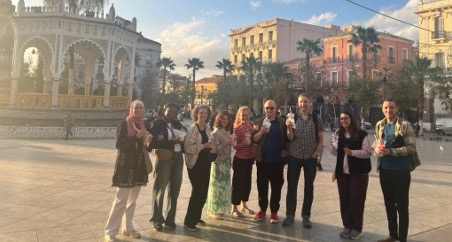
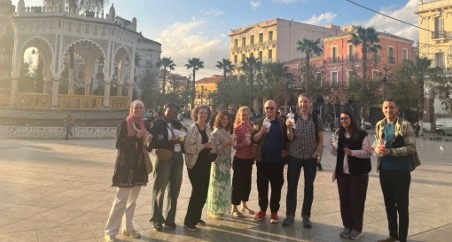
Dr Sura Qadri (on the left) with the KCL delegation in Mulberry Square, Blida, with some local guides, sampling sherbet, a lemonade drink famous in the town.
In addition to our time at the university, Dr Ouled Haddar organised a programme of cultural visits for us, and we were treated to guided tours of the UNESCO Roman World Heritage Site in Tipaza, the Martyr’s Museum in Algiers, as well as the School of Fine Art in the capital. We spent a delightful afternoon at the Botanical Garden of El Hamma, and an evening with the head of the British Council in Algiers, Mr Hamza Koudri, author of Sand Roses (2024), a rare English-language Algerian novel.
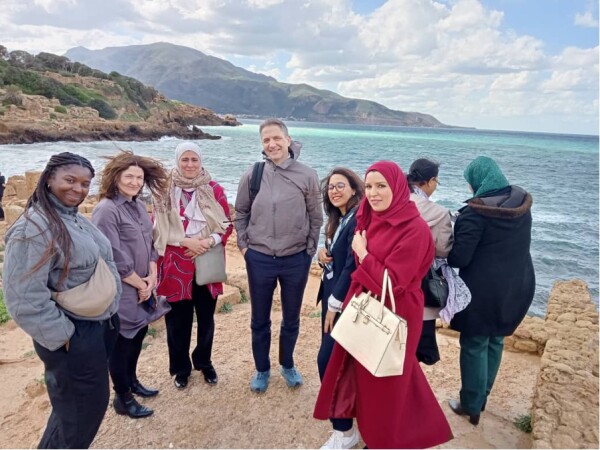
Windswept in Tipaza
A group of us in the Cambridge French Section are now working with Professor Harrison and Dr Boutaghou to arrange a visit for Dr Ouled Haddar and a delegation of colleagues to Cambridge and London in summer 2026. As well as attending Cambridge Africa Day, they will take part in a research symposium at KCL which will offer further opportunity for us to look for research synergies and find where we can work together on projects in the future. We hope also to show them an exhibition of our North Africa collections in the UL, and to organise a range of screenings, cultural events and meetings with colleagues in Cambridge who were unable to make the journey to Blida in April.
By Dr Sura Qadri