
Completing my PhD in Cambridge
I still remember the moment I received my scholarship letter. Having missed the original admission email from the University of Cambridge, it was only upon receiving the scholarship letter that I realised, to my delight, that I had been admitted to the PhD programme in Engineering. It remains one of the happiest moments of my life. I went for a long walk, something I often do when I need space to take in exciting news.
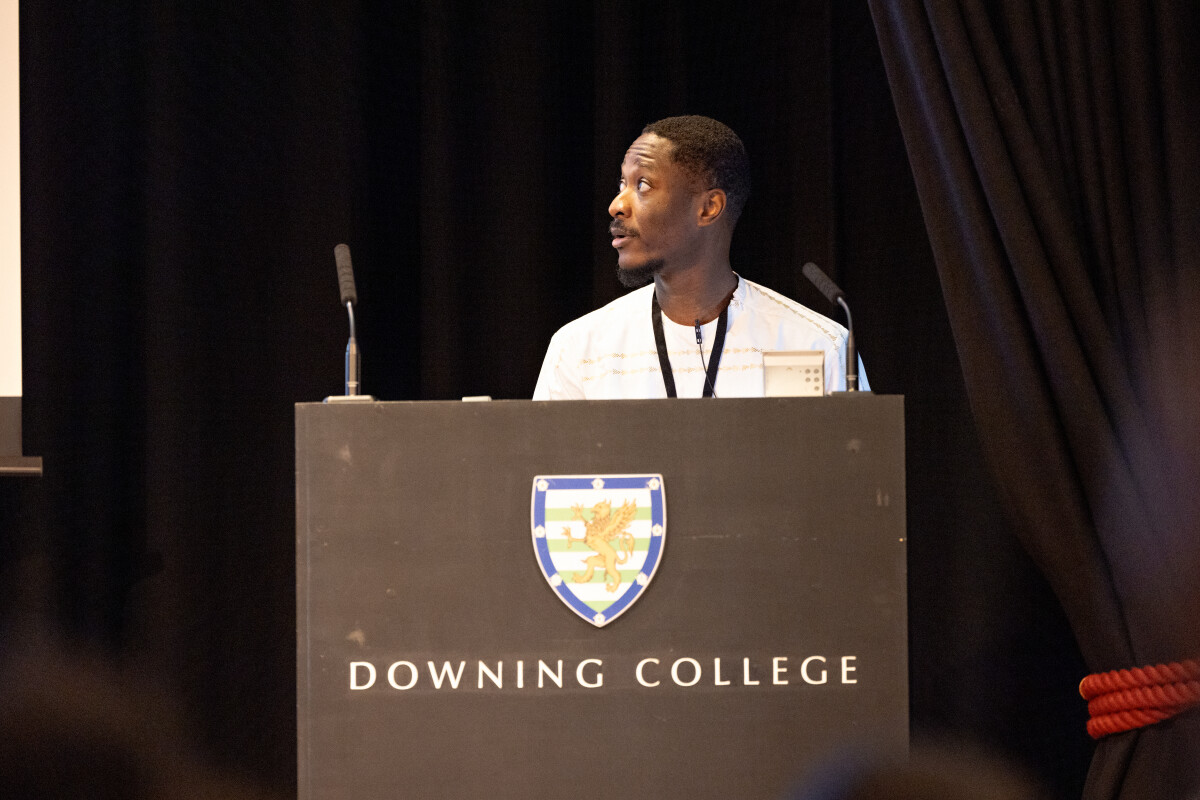
Cambridge proved to be a deeply enriching experience. During my time there, I founded and led the Enterprise Society at my college and continued to be involved in entrepreneurship both within and beyond the University. Through this, I had the opportunity to meet and learn from a wide range of remarkable people, including experienced entrepreneurs.
My research focused on developing a device for neural regeneration following spinal cord injury. The project moved quickly in its early stages, and within the first two months I was able to answer a key question that had been difficult to resolve in the literature. I still remember my supervisor’s excitement at that milestone. Soon afterwards, however, the work became substantially more challenging. One reason was that I was working on a neural electrode system with few clear reference points for the specific application. It was a fun test of resilience.

During this period, I discovered boxing, which became an important outlet. I trained consistently with the University’s Blues team and represented the University in competitions. Stepping into a boxing ring was one of the most meaningful decisions I made during my time at Cambridge. It strengthened my discipline and helped me develop greater composure under pressure. Music also played an important role. I spent many hours in the music room at my college, using it either to reset after another failed experiment or to share quiet moments with loved ones, while occasionally performing more publicly.
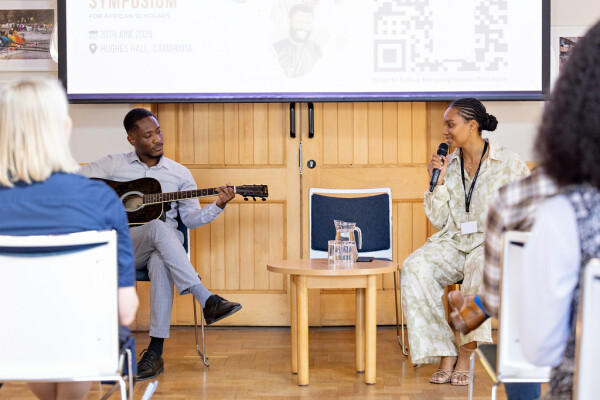
Performing at the Postgraduate Research Symposium 2025
In time, things began to take shape again, and the research led to the filing of a patent for the device.
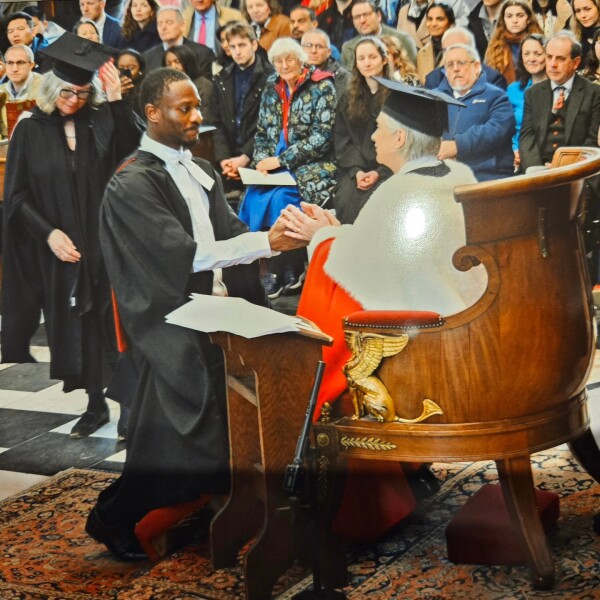
Looking back, my time at Cambridge was both formative and deeply rewarding. I remain sincerely grateful to the University of Cambridge and Cambridge-Africa for this opportunity and for the support that made it possible. In the years ahead, I hope to contribute in a similar way by supporting the ambitions of others as they work towards their potential.
By Yaw Ofosu Ansong Snr