
My Experience at Cambridge
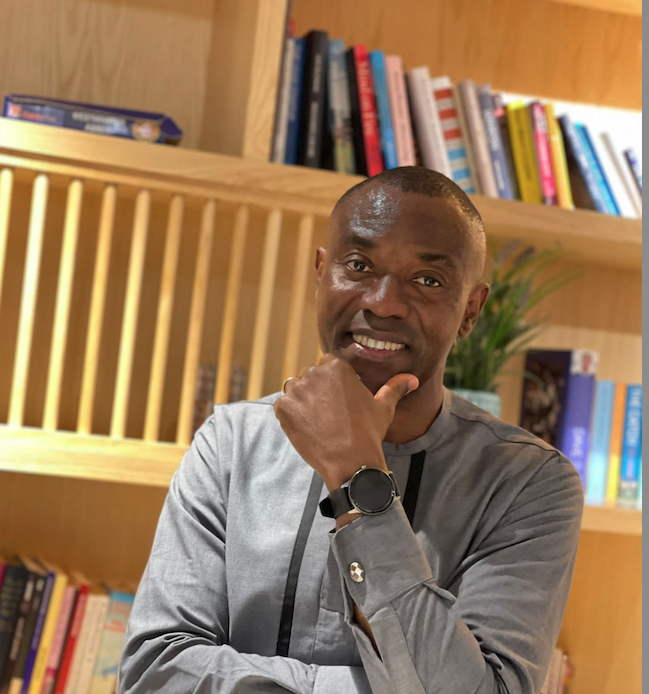
Hinc lucem et pocula sacra—“From this place, we gain enlightenment and precious knowledge.” Few philosophical statements more aptly capture the epistemological shifts and ontological reshaping that defined my six years at the University of Cambridge.
I arrived in Easter 2019, with high academic expectations and a deep thirst for knowledge. That ambition, while important, proved only a small part of what Cambridge would offer. In many ways, I was naïve. The experiences I gained, the opportunities I encountered, and the exposures I navigated extended far beyond my initial academic aspirations. Cambridge did not impose transformation; rather, it offered a rich, open environment within which transformation became possible.
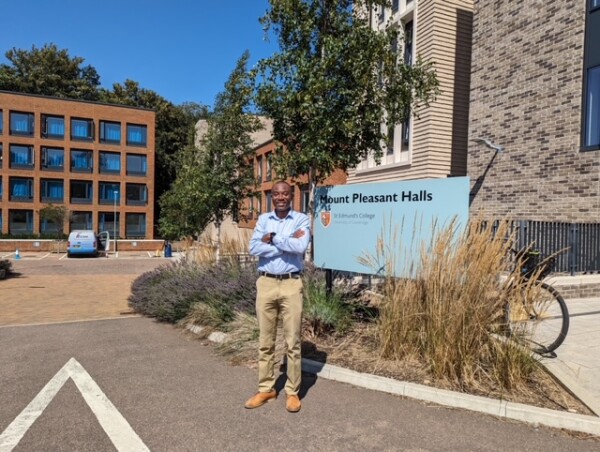
My multiple grids of identity—as a Ghanaian, an African scholar, a mature student, and a member of a global academic community—intersected constantly with this environment to shape my experience. For the next six years, St Edmund's College, Cambridge, became my home, while the Institute of Criminology and the Faculty of Law, University of Cambridge, served as my intellectual anchor. Yet, some of my most formative moments occurred outside formal academic spaces.
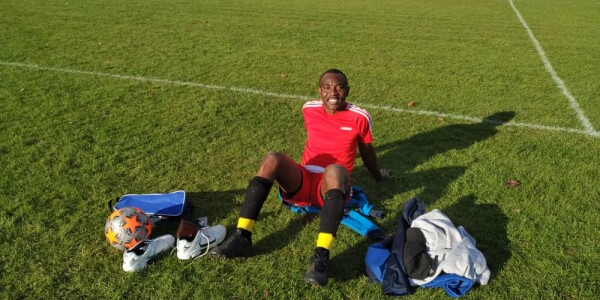
One of my earliest adjustments was unexpectedly practical in nature—relearning how to ride a bicycle confidently. Shortly afterwards, I joined St Edmund’s College football team. Football became far more than a recreational activity; it proved to be a site for multiple encounters. The team reflected the diversity of the college itself, bringing together individuals from several countries. Through this, I began to appreciate how geography, culture, generation, and history shape worldviews and lived realities. Even the game itself had evolved: tackles once considered fair in my earlier playing days were now deemed fouls, compelling me to adapt quickly. This small yet significant shift mirrored a broader process of unlearning and relearning.
Daily life in the residential halls further deepened these encounters. Sharing spaces with people from across the world exposed me to diverse culinary traditions, social norms, and intellectual perspectives. Dining halls became informal classrooms where conversations on governance, law, science, and global affairs unfolded organically among people from multiple nations and disciplines. These interactions continually challenged and expanded my perspectives.
Beyond my social life, my involvement in college and university governance—through roles on the Graduate Union and the disciplinary board, as a student representative at the Institute of Criminology, and as a student Ambassador at St Edmund’s College—equipped me with insights into the institutional processes and decision-making. These experiences revealed the complexity of governance within elite academic institutions and the importance of representation and dialogue.
The city of Cambridge itself offered another layer of reflection. Its quaint yet imposing architecture embodies centuries of history. For me, these structures resonated deeply with Ghana’s colonial experience. They evoked thoughts about empire, exploitation, class, race, governance, and justice—reminding me that the production of knowledge is often intertwined with histories of power and inequality.
At various moments, my reflections extended beyond Cambridge to broader historical trajectories. I found myself thinking about European expansion into West Africa, from the arrival of the Portuguese in the 15th century to the construction of the early trading forts and subsequent entanglements of gold, slavery, and global commerce. These thoughts were not abstract—they formed part of an ongoing process of situating myself within overlapping histories of knowledge, power, and identity.
The COVID-19 pandemic marked a particularly intense period of my time in Cambridge. At the height of the crisis, I was among the few who remained in college and in the city. The emptiness of once vibrant spaces underscored both the fragility and interconnectedness of global life. Experiencing the pandemic from within Cambridge added yet another dimension to my understanding of risk, governance, and human resilience. My Christian life improved tremendously from the uncertainty that characterised that period.
Thus, my period of study at the University of Cambridge represents not merely an academic milestone but a profound intellectual and professional transformation, whose effects will continue to unfold across multiple domains of practice.
Crucially, the value of this experience extends far beyond any personal academic advancement. The knowledge, networks, and competencies that I acquired are already generating a multiplier effect across the various sectors within which I operate. My work engages with the United Nations system, government agencies, civil society organisations (CSOs), media institutions, and community-based NGOs. In each of these spaces, the insights gained from Cambridge are actively informing my contributions—enhancing the quality of the analysis, strengthening the evidence-based advocacy, and improving the design and implementation of interventions.
In sum, my time at Cambridge was shaped by the continuous interaction between my identities and a uniquely enabling environment. It was an experience that was intellectually rigorous, socially expansive, and deeply reflective. In many ways, it exceeded my expectations—not only as an academic journey but also as a transformative life experience. This experience has already started to have positive impacts on society beyond my country, Ghana (where I have returned).
Without a doubt, I could not have had this opportunity and gained the experience and knowledge to benefit myself and the wider society without the funding that was generously provided by the Cambridge Trust.
To conclude, I can confidently affirm: Hinc lucem et pocula sacra. I gained both enlightenment and precious knowledge. Cambridge is indeed Cambridge!
By Emmanuel Sowatey