

Mycorrhiza efficacy as an alternative fertilizer for Mungbean yield in Nigeria

Our project focussed on the efficacy of mycorrhiza on the growth of Mungbean plants under drought condition in Nigeria, as well as transferring knowledge on measures to mitigate drought stress occurrence to mungbean farmers and building capacity of researchers involved in this project. Mungbean is a staple legume crop in Nigeria and serves as an excellent source of plant-based protein, although underutilized. Drought is a state of limited moisture availability and it is ranked as one of the most lethal abiotic stresses. Drought stress is currently hindering agricultural produce in sub-Saharan Africa and Nigeria. To alleviate drought stress on mungbean yield, we decided to employ the use of mycorrhiza fungi to be used as an alternative fertilizer to boost the growth of mungbean plants.
We sourced mungbean seeds from 10 farmers located in different geographical regions of the country for the experiment. We identified a variety (TVR117) as possessing drought tolerant traits, after inoculating this variety with mycorrhiza while exposed to drought condition (Figure 1). 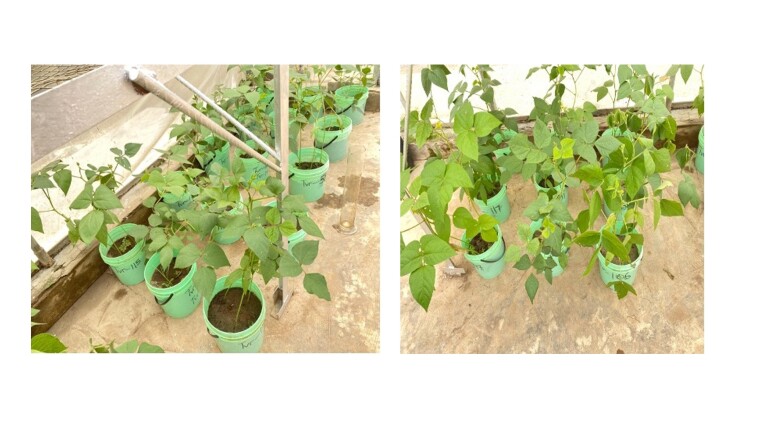
Figure1: Mungbean plant (Tvr117) experiencing a viable growth when treated with mycorrhiza and yet under drought condition
A key part of the project was the purchase of research equipment and capacity building of staff and students through seminar presentations (Figure 2). The experimental work was carried out collaboratively with the African counterpart and a female master’s student as an assistant researcher.
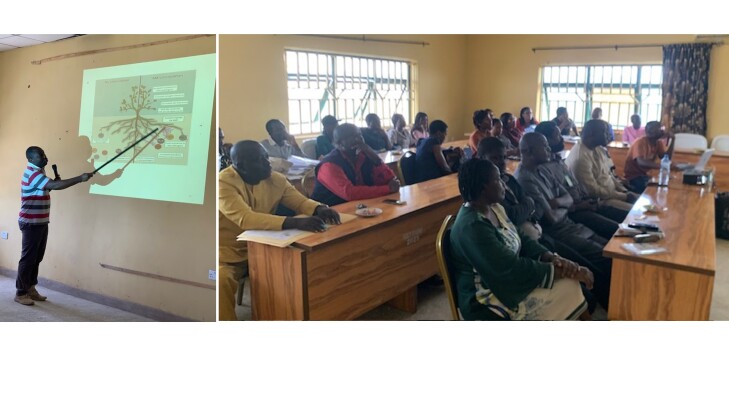 Figure 2: Seminar and equipment presentation on Cambridge-Africa ALBORADA Research Fund project to the Faculty of Life Science members by Dr Iwuala
We found that mycorrhiza benefitted the growth of Tvr 117 variety, indicating that this variety can serve as a promising mungbean plants particularly for drought pone areas. Firstly, our findings support UN sustainable developmental goal (SDG) 2 for 2030: to achieve zero hunger. Secondly, a long-term outcome of this research will be the availability of mungbean varieties with improved yields in climate stressed farming systems (SDG) 13 on urgent action to combat climate change and its impact. In addition, the leaves of mungbean could be a viable biostimulant, thereby enabling soil enrichment for sustainable agriculture in the global south.
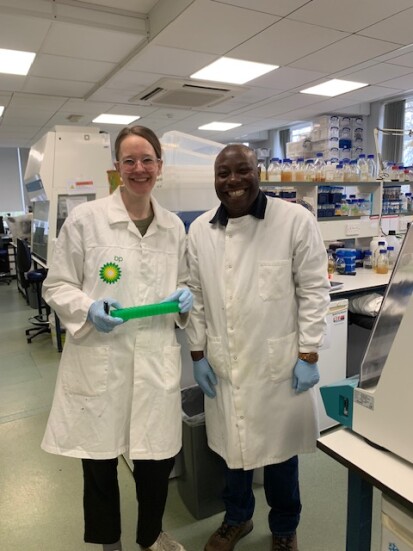
Figure 3 Dr Luginbuehl and Dr Iwuala at the host lab in University of Cambridge

Figure 4: Dr Iwuala with Prof Chris Howe, President, Corpus Christi College, Cambridge.
Acknowledgement: We are grateful to the ALBORADA fund for supporting this work and activating a productive collaboration. Dr Iwuala also wishes to thank the Vice Chancellor of Federal University Oye Ekiti, Nigeria Professor Joshua Ogunwole for his support towards creating the enabling environment for the completion of this study.
By Leonie Luginbuehl, Department of Plant Science, University of Cambridge UK, and Emmanuel Iwuala, Department of Plant Science and Biotechnology, Federal University Oye Ekiti, Nigeria.