The Candle Usually Died Before I Did
On a good night growing up in rural Democratic Republic of Congo, I could finish my homework before the flame drowned in its own wax and the page went dark. Candles were not free, and light was a resource like any other in our home — something to be planned for, stretched, and never wasted. I learned to ration light the way other children ration sweets.
Darkness was normal. Our region, shaped by conflict and left largely off the grid, simply bent its daily life around the absence of electricity. Yet somewhere in those evenings, a question took hold of me and never let go: how could a continent with some of the richest natural resources on Earth still leave millions of its people without something as fundamental as electricity?
Two decades later, I am still chasing that answer — now as a PhD student in the Department of Engineering at the University of Cambridge, researching how future electricity systems can run on renewable energy without losing reliability, something my childhood never had.
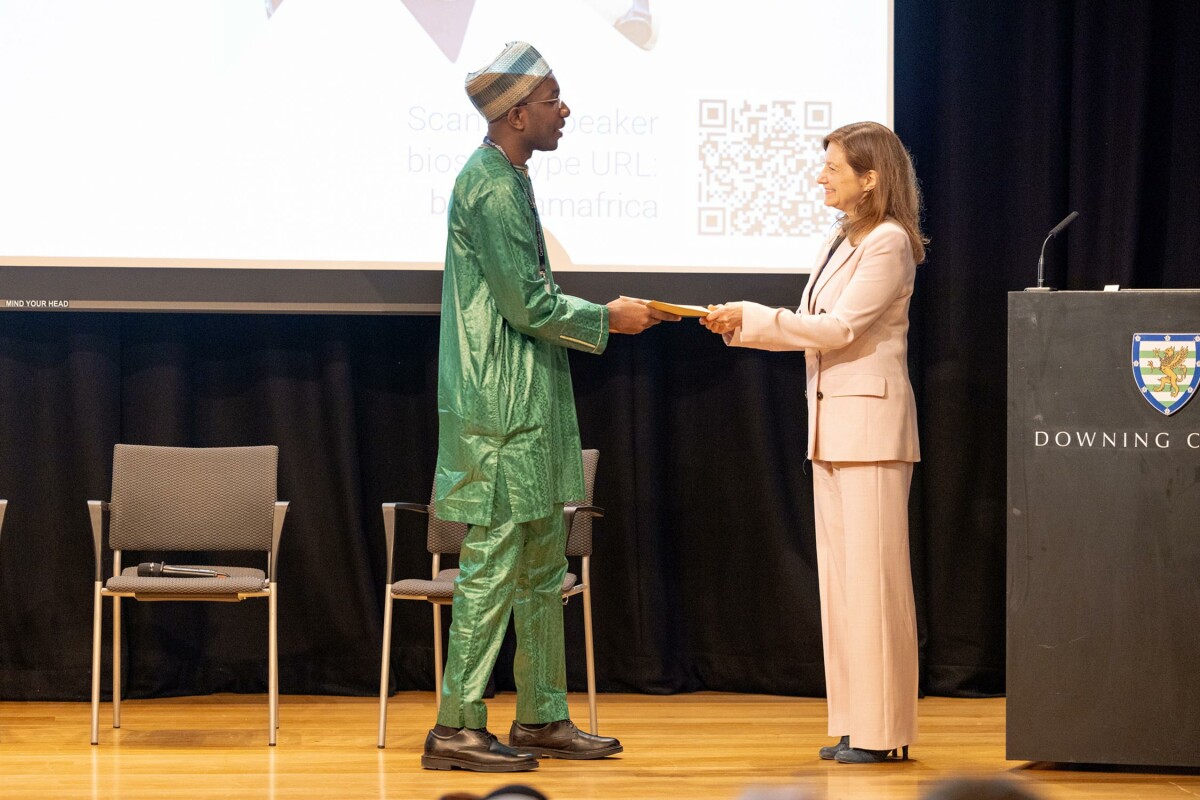
This year, I was honoured to receive the 2026 Dr Amit Bhasin Prize, which recognises an outstanding African research student at Cambridge. To learn that I am the first scholar from the Democratic Republic of Congo to receive it is both a profound privilege and a stark reminder of the work ahead. If you are a young Congolese student wondering whether this path is open to you: it is. This prize says so.
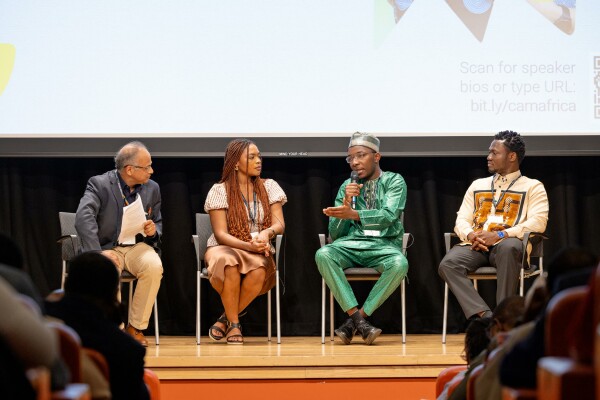
Parfait Onema Lutundula at the Cambridge-Africa Day 2026
The Invisible Grid: The Challenge Driving My Research
For many people, electricity is only noticed when it disappears. For millions across Africa, it remains something they are still waiting for. I have seen what that waiting costs — health centres where darkness dictates what care is possible after sunset, businesses that cannot grow, and students whose learning ends when daylight fades.
The global transition to renewable energy offers real hope, but it fundamentally changes how power grids behave. Traditional power stations rely on massive, spinning turbines that naturally provide “inertia” — a physical buffer that stabilises the grid against sudden disruptions. In contrast, wind and solar systems connect to the grid through electronic converters, which lack this mechanical buffer. As renewable generation grows, keeping these future power systems stable, reliable, and secure becomes one of the defining engineering challenges of our time.
My doctoral research develops new decentralised methods that help engineers guarantee the stability of these next-generation electricity systems — from rural microgrids to offshore renewable hubs and high-voltage direct current (HVDC) networks. The ambition is not simply to advance theory, but to build practical, interpretable tools that system operators can deploy on the ground.
The boy who once did his homework in the dark now spends his days working out how to keep the world’s lights on.
From the Lab to the Field
Research must not remain confined to academic journals. Long before beginning my PhD, I co-founded Tech Power Services, a clean energy social enterprise in the Democratic Republic of Congo, to tackle energy poverty head-on. Since then, our team has contributed to the deployment of more than 4 MWp of solar energy systems across the country.
Among all our projects, one remains especially close to my heart: a 50 kWp healthcare microgrid in Kikwit that powers ten health facilities. When electricity reaches a rural health centre for the first time, the change is immediate and remarkably ordinary — lights stay on, vaccines remain refrigerated, and medical equipment can finally be trusted.
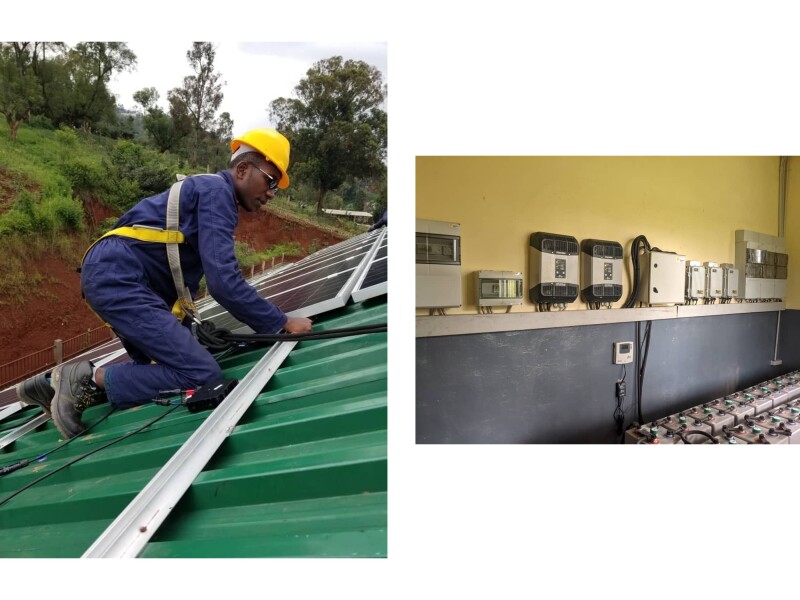
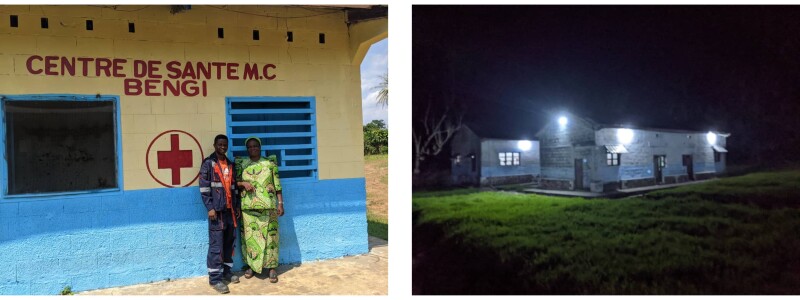
The deployment of a 50 kWp solar minigrid in Kikwit, DRC, which now provides reliable, round-the-clock power to ten local healthcare centres.
Across our wider portfolio serving schools, businesses, and rural communities, I have watched classrooms extend beyond sunset and entrepreneurs build sustainable livelihoods. Electricity does not simply power equipment; it expands what people are able to imagine for their future.
Today, we are combining this field experience with advances in artificial intelligence to make the design of resilient microgrids faster, more scalable, and better adapted to local conditions. By exploring how renewable energy can power productive uses like agro-processing, we aim to transform rural electrification from a basic necessity into a powerful catalyst for regional economic growth.
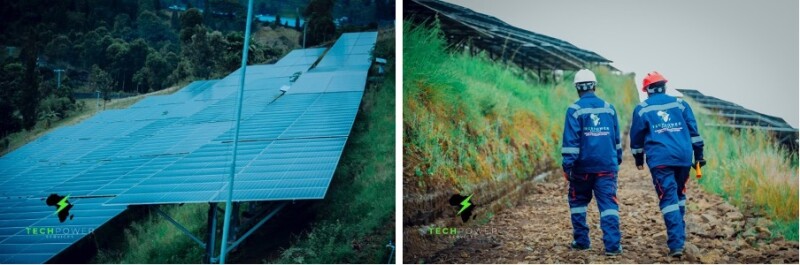
Engineers from Tech Power Services on-site during the construction of a 3.7 MW minigrid in Bulengo, eastern DRC
Opening Doors for Others
My own journey has been shaped entirely by people who opened doors for me. Transformative scholarships altered the trajectory of my education, and I believe the greatest way to honour those opportunities is to build them for others.
As Co-Chair of the Cambridge-Africa Mentorship Programme, I have had the privilege of supporting prospective African students navigating the gruelling journey to postgraduate study at Cambridge. In our latest cycle, our team led a record-breaking cohort involving 829 applicants from 33 African nationalities. By expanding our outreach to underrepresented Francophone and Lusophone communities, and securing university diversity funding, we are working to ensure that African students don’t just arrive at world-class institutions, but truly belong there.
Talent exists everywhere; opportunity does not. Helping talented young Africans access global education may prove just as important as any research paper I ever publish.
The Question That Stays Lit
As I walked onto the stage to receive the Dr Amit Bhasin Prize from the Vice-Chancellor of the University of Cambridge, I found myself thinking less about the award itself than about the distance it represented. I thought of the long road from a candlelit desk in rural Congo to one of the world’s oldest universities — and about the community of mentors, family, and colleagues who helped me cross it.
Dr Bhasin devoted his life to supporting African scholars, believing deeply in the power of research to improve human lives. His legacy reminds us that academic excellence and social impact are not competing ambitions; they are most powerful when pursued together.
The candle that once lit my homework eventually burned out.
The question it lit never did.
By Parfait Onema Lutundula